Fulani Militias Kill 13 in Coordinated Attacks on Christian Communities in Plateau State
October 15, 2025 | Nigeria
At least 13 Christians were killed and several others injured after armed Fulani militias launched coordinated attacks on multiple villages in Barkin Ladi Local Government Area (LGA) of Plateau State on October 14.
The attackers targeted Rawuru, Tatu, and Lawuru communities predominantly populated by Christian farmers before extending the violence to other nearby villages. Nearly 40 cows were stolen, farmlands were destroyed, and several houses were burned during the overnight assault.
Attack During Evening Prayers
Eyewitnesses from the Rawuru mission center reported that gunmen stormed the compound around nightfall while residents gathered for evening prayers.
Two members of the mission center were killed instantly, while others fled into surrounding bushes to escape the gunfire.
From there, the attackers advanced into Tatu village, where ten more people were shot dead in what locals described as a targeted attack against Christian residents.
In Lawuru, located a few miles away, two additional villagers were killed and livestock seized.
Local leaders said threats had been issued earlier by suspected militants and duly reported to security forces, but no preventive action was taken.
“We informed the authorities days before the attack that we were under threat, but no action was taken,”
said a church leader from Rawuru, who requested anonymity.
Widespread Destruction and Displacement
The violence was not limited to the three main villages. Additional attacks were reported in Rachas (Heipang District) and Rawuru (Fan District), all within Barkin Ladi LGA.
Authorities and local sources say the simultaneous nature of the attacks points to extensive planning and coordination.
By dawn, 13 people had been confirmed dead, many more wounded, and numerous families displaced after their homes, barns, and crops were burned.

Community Leaders Demand Action
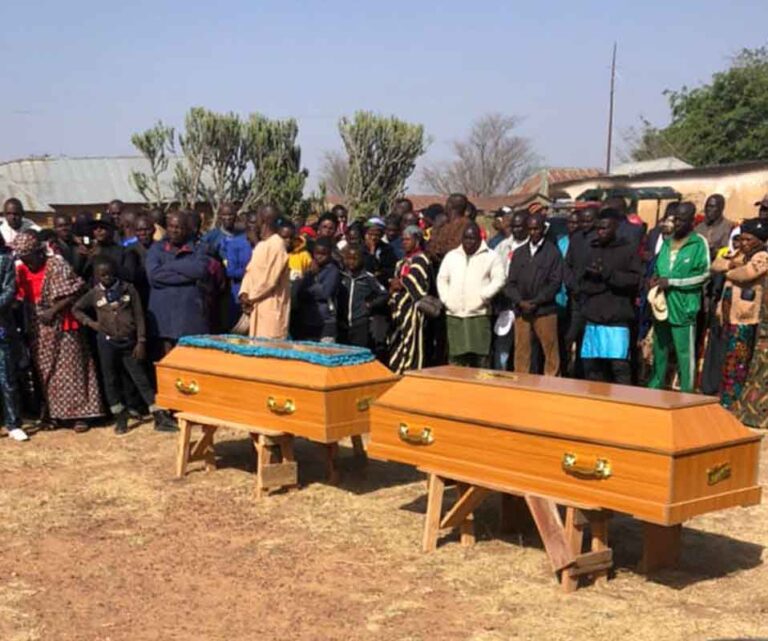
During the mass burial held on October 15 in Rachas, Hon. Stephen Gyang Pwajok, Executive Chairman of Barkin Ladi LGA, condemned the attacks as “unprovoked”. He warned that the perpetrators appeared intent on displacing indigenous Christian communities from their ancestral lands.
Da Paul Tadi-Tok, district leader of Heipang, echoed these concerns, noting that Christian farming communities continue to face repeated attacks.
He urged authorities to enforce stricter regulations preventing non-resident herders from grazing within settled communities, which could help identify infiltrators who disguise themselves as herders.
Tadi-Tok also called for the revitalization of Operation Rainbow, Plateau State’s community-based security initiative, arguing that local defense structures remain the most effective in responding swiftly to rural attacks.
Government Promises Stronger Security Measures
Brigadier General Shippi Gakji Goshwe (Rtd.), security adviser to Governor Caleb Manasseh Mutfwang and coordinator of Operation Rainbow, assured residents that the government is working to strengthen security frameworks.
He stated that new recruits are currently undergoing training to support conventional security agencies in responding to rural violence.
Despite these promises, fear and frustration remain widespread. Villages across Barkin Ladi and nearby LGAs like Mangu, Riyom, and Bokkos have faced similar attacks over the past year, resulting in hundreds of deaths and mass displacement.
Appeals for Justice and International Support
Community leaders and churches continue to express concern about the lack of accountability and the slow or absent response from security forces, especially when advance warnings are issued.
Faith leaders in Plateau State have appealed for international attention and humanitarian support, urging organizations to assist displaced families and advocate for justice.
As the rainy season ends, a period when farmers harvest their crops, many fear a new wave of attacks. The recurring violence has left Christian communities uncertain about their safety and the future of their ancestral homeland.